UV Exposure and Layered Protection
Review direct and reflected UV, skin and eye risks, protective clothing, hats, suitable eyewear, shade, scheduling, sunscreen label use, reapplication awareness, and limits of any single control.

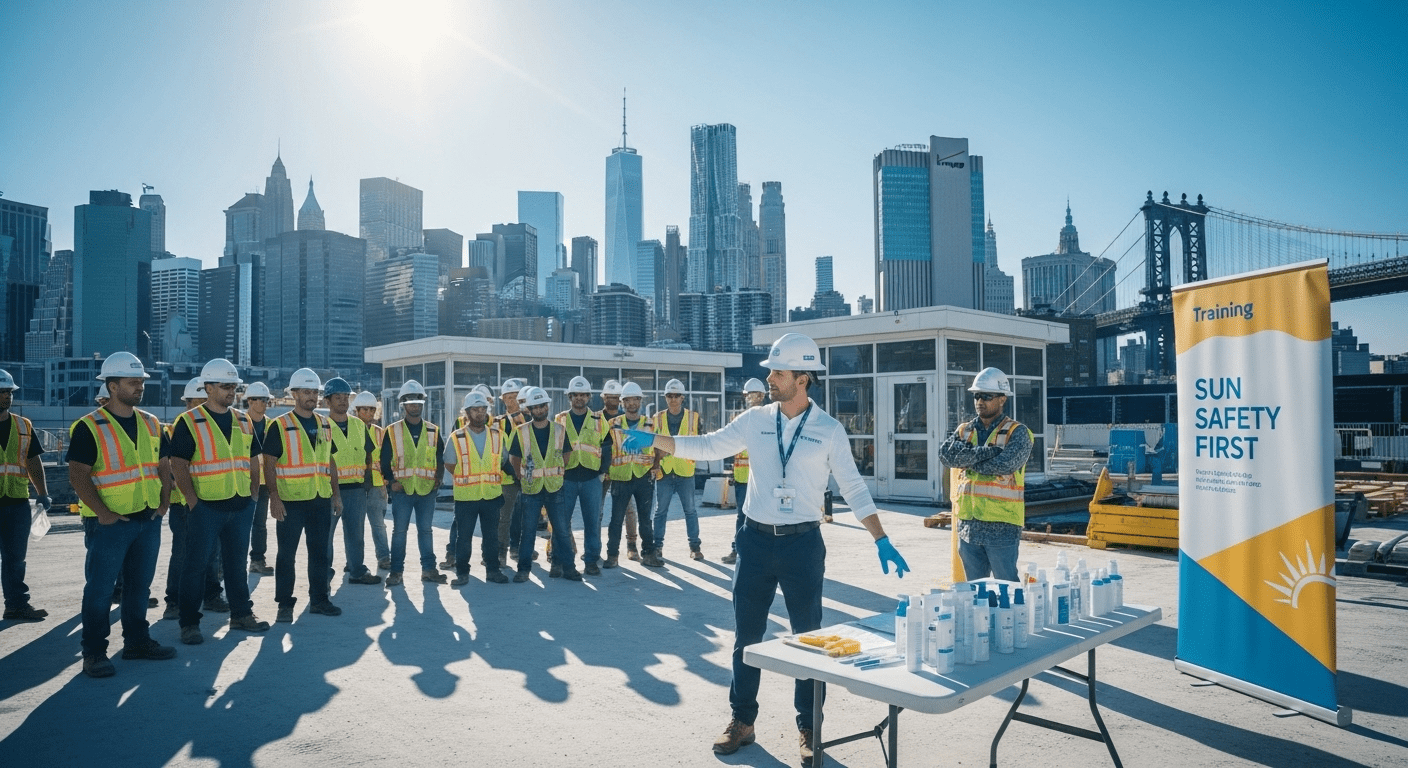
Course Code: SE1
The 1-Hour Protection from Sun Exposure course provides construction and trade workers with the knowledge and strategies needed to reduce the health risks associated with working outdoors in direct sunlight. Prolonged sun exposure can lead to heat-related illnesses, dehydration, sunburn, and an increased risk of skin cancer. This training focuses on preventive measures and safe work practices to help workers stay protected on the job.
Participants will learn how to recognize symptoms of heat stress, apply proper sun protection techniques, and implement safe hydration practices. The course also covers the selection and correct use of personal protective equipment (PPE) such as hats, sunglasses, and sunscreen. This training aligns with OSHA recommendations and NYC Department of Buildings requirements for Site Safety Training (SST).
This course counts as 1 Hour of General Elective credit toward your Site Safety Training (SST) card and is valid for 5 years from completion unless otherwise specified by the New York City Buildings Department.
| Morning 1 Hour | Afternoon 1 Hour | Evening 1 Hour | Weekend 1 Hour | ||||
|---|---|---|---|---|---|---|---|
| Monday-Friday 10:00 AM-11:00 AM | Monday-Friday 2:00 PM-3:00 PM | Monday-Friday 6:00 PM-7:00 PM | Saturday 1:00 PM-2:00 PM | ||||
| Monday-Friday 10:00 AM-11:00 AM | Monday-Friday 2:00 PM-3:00 PM | Monday-Friday 6:00 PM-7:00 PM | Saturday 1:00 PM-2:00 PM | ||||
| Monday-Friday 10:00 AM-11:00 AM | Monday-Friday 2:00 PM-3:00 PM | Monday-Friday 6:00 PM-7:00 PM | Saturday 1:00 PM-2:00 PM | ||||
| Monday-Friday 10:00 AM-11:00 AM | Monday-Friday 2:00 PM-3:00 PM | Monday-Friday 6:00 PM-7:00 PM | Saturday 1:00 PM-2:00 PM | ||||
| Monday-Friday 10:00 AM-11:00 AM | Monday-Friday 2:00 PM-3:00 PM | Monday-Friday 6:00 PM-7:00 PM | Saturday 1:00 PM-2:00 PM | ||||
| Monday-Friday 10:00 AM-11:00 AM | Monday-Friday 2:00 PM-3:00 PM | Monday-Friday 6:00 PM-7:00 PM | Saturday 1:00 PM-2:00 PM | ||||
| Monday-Friday 10:00 AM-11:00 AM | Monday-Friday 2:00 PM-3:00 PM | Monday-Friday 6:00 PM-7:00 PM | Saturday 1:00 PM-2:00 PM | ||||
| Monday-Friday 10:00 AM-11:00 AM | Monday-Friday 2:00 PM-3:00 PM | Monday-Friday 6:00 PM-7:00 PM | Saturday 1:00 PM-2:00 PM | ||||
| Monday-Friday 10:00 AM-11:00 AM | Monday-Friday 2:00 PM-3:00 PM | Monday-Friday 6:00 PM-7:00 PM | Saturday 1:00 PM-2:00 PM | ||||
| Monday-Friday 10:00 AM-11:00 AM | Monday-Friday 2:00 PM-3:00 PM | Monday-Friday 6:00 PM-7:00 PM | Saturday 1:00 PM-2:00 PM | ||||
| Monday-Friday 10:00 AM-11:00 AM | Monday-Friday 2:00 PM-3:00 PM | Monday-Friday 6:00 PM-7:00 PM | Saturday 1:00 PM-2:00 PM | ||||
| Monday-Friday 10:00 AM-11:00 AM | Monday-Friday 2:00 PM-3:00 PM | Monday-Friday 6:00 PM-7:00 PM | Saturday 1:00 PM-2:00 PM | ||||
*Please call the school to see if the schedule is available
Build awareness of ultraviolet radiation and occupational heat as related but distinct outdoor-work hazards, using layered prevention through planning, shade, scheduling, clothing, sunscreen, hydration, rest, acclimatization, monitoring, and emergency response.
Review direct and reflected UV, skin and eye risks, protective clothing, hats, suitable eyewear, shade, scheduling, sunscreen label use, reapplication awareness, and limits of any single control.
Study environmental heat, workload, clothing and PPE, hydration, rest and cooling areas, workload adjustment, new or returning worker acclimatization, and employer heat plans.
Recognize possible cramps, headache, dizziness, weakness, nausea, confusion, poor coordination, fainting or altered behavior; stop work, notify supervision, and use buddy monitoring.
Activate emergency services for severe symptoms, follow the employer plan, move from heat when safe, begin trained first aid and cooling under current protocols, document, and correct unsafe conditions.
Hydration or sunscreen alone is not complete protection. Follow the employer heat and UV plan, account for task demands and PPE, and seek medical guidance for personal health conditions or medications that may affect risk.